How to Review a Teapot: Pour Test, Heat Retention, and Cleanup Checklist
A repeatable framework for judging any teapot — how to test the pour, measure heat retention, check handle...

A good cup of tea needs very little: leaves, hot water, and something to drink from. Everything past that exists to make the process easier, more repeatable, or simply more pleasant. The trouble for a beginner is that tea shop shelves are crowded with gear, and most of it assumes you already know how you brew. You do not need to know yet. You need a small kit that lets you make tea this week and figure out your own habits from there.
Here is a practical checklist, roughly in the order I would buy things. Nothing here is a rule. Treat it as a starting point you can bend to your kitchen, your budget, and the kind of tea you actually like drinking.
Two things matter before anything else: how you heat water, and where the leaves steep.
The kettle. Any kettle works. Stovetop, electric, a pot on the stove — all fine. What a variable-temperature kettle adds is control. Green and white teas often taste sweeter and less bitter when brewed below a rolling boil, while oolong and black teas generally want water closer to boiling. If you do not want a new kettle, a simple kitchen thermometer does the same job, or you can boil and let the water sit for a minute or two. That pause is not precise, but it is better than nothing.
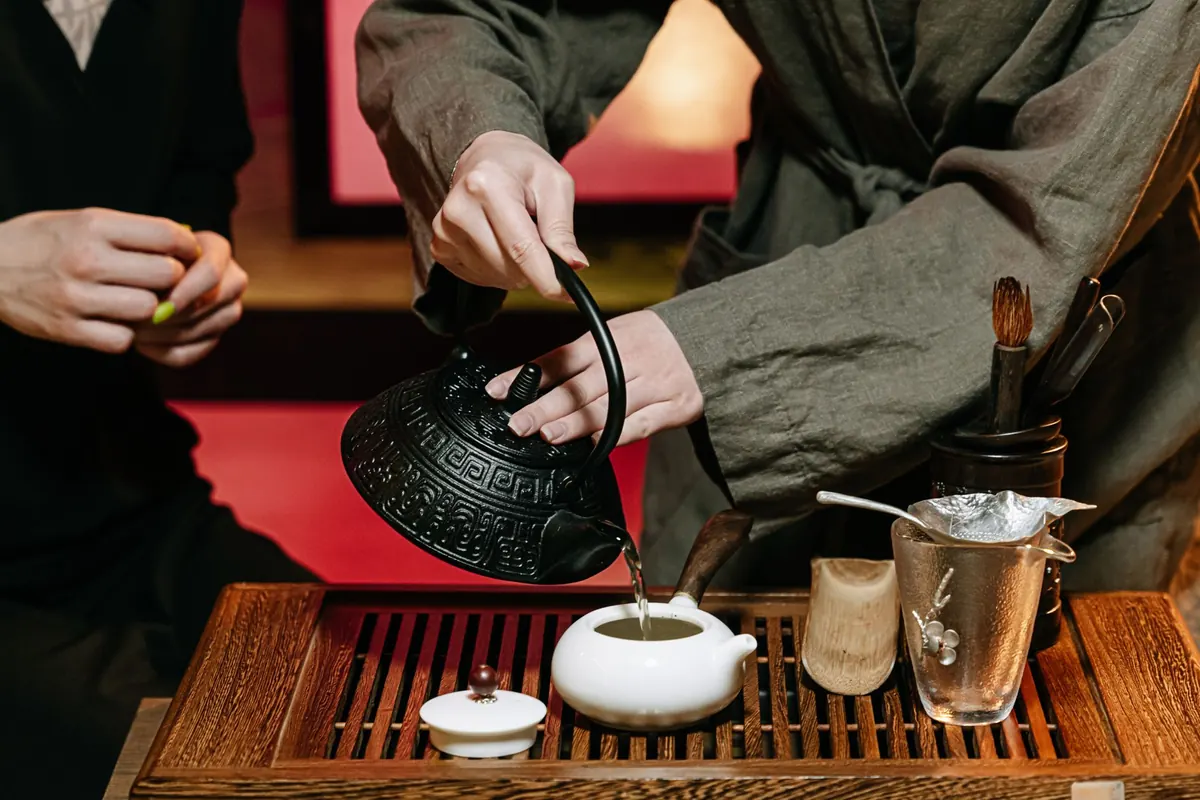
The brewing vessel. This is where beginners overbuy. A plain mug and a basket infuser will make excellent tea. So will a small teapot, a gaiwan, or a French press you already own. Pick one, use it for a month, and notice what annoys you. Maybe the basket is too shallow and the leaves stay cramped. Maybe the teapot pours badly. That irritation tells you what to buy next far better than a list can.
A mug with a removable infuser is the lowest-friction option. A teapot suits brewing for two or keeping a larger volume hot. A gaiwan — a small lidded bowl — is inexpensive, simple, and excellent for tasting many teas in small amounts, though it takes practice and hot fingers are part of the learning. If you mostly drink tea alone at a desk, the mug wins.
Consistency is what makes your tea improve. If last week's cup was perfect and this week's is bitter, you want to know why, and the answer is usually leaf amount, water temperature, or time.
A small digital kitchen scale that reads in grams is the most useful accessory nobody talks about. Tea leaves vary enormously in size and weight — a teaspoon of a fluffy white tea and a teaspoon of a dense rolled oolong are not remotely the same amount of tea. Weighing solves that. If a scale feels like overkill, use a measuring spoon and accept some variation. As a rough starting point, about one teaspoon of leaf per cup of water suits many teas, but adjust to taste. Brewing is a series of small adjustments, not a formula.
Whole leaves need space to open. That is why a cramped ball-shaped infuser produces disappointing tea: the leaves at the center barely get wet.
Look for a basket infuser that fills most of your mug, or a fine mesh strainer you can set over a cup or pitcher. Fine mesh matters, because it catches the small particles that make a cup cloudy and bitter at the bottom. If you use a teapot, pour through a strainer into your cup rather than leaving leaves sitting in the pot, unless you are deliberately brewing a tea that handles long steeping.
Once you know how you brew, these tend to earn their place:
A few things get recommended to beginners far too early.
If you want a list to take to the shop, start here:
That is it. You can make very good tea with those five things for a long time.
The best accessory is the one you reach for without thinking. Buy one item at a time, use it for a few weeks, and let your own brewing habits decide what comes next. A beginner who owns three good tools and drinks tea daily will learn more than someone with a cabinet full of gear and a habit of using it twice a month.
If you are sensitive to caffeine, pregnant, or taking medication, it is worth speaking with a healthcare professional about how much tea suits you.
Photo: Ylanite Koppens / Pexels
A repeatable framework for judging any teapot — how to test the pour, measure heat retention, check handle...
Loose leaf and tea bags compared on flavour, cost per cup, convenience and waste — plus a practical way to...
Professional tea tasting comes down to attention: aerating each sip, reading aroma in three stages, and...